
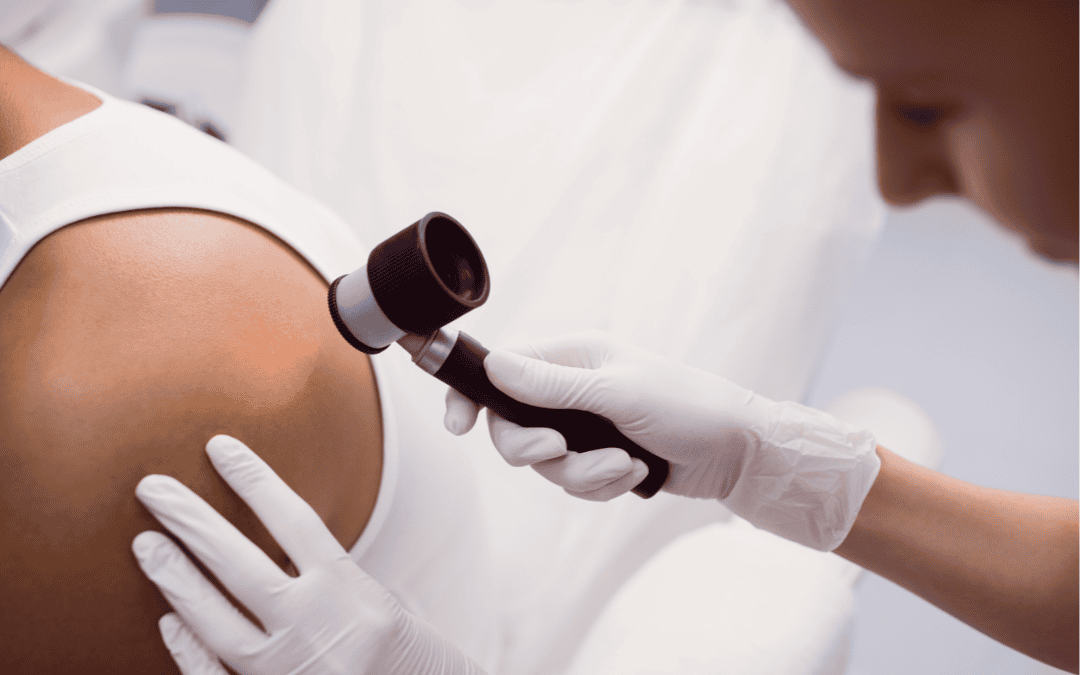
What a normal mole looks like
A typical, healthy mole tends to be even in colour, somewhere in the range of tan, brown, or close to your natural skin tone. It usually has a smooth, well-defined edge and a fairly symmetrical, round or oval shape. It is generally smaller than the top of a pencil rubber, and it stays much the same over time.
It is also perfectly normal for moles to change slowly across your life. New ones can appear, particularly in childhood and the teenage years, and some darken slightly with age or during pregnancy. Slow, even change is rarely a concern. It is a sudden or uneven change that deserves a closer look.
How to tell if a mole needs checking
Dermatologists use a simple checklist, often called the ABCDE rule, to spot moles that need assessment. It is easy to remember and worth applying the next time you check your skin.
- Asymmetry. One half of the mole does not match the other.
- Border. The edges are ragged, blurred, or irregular rather than smooth.
- Colour. There is more than one colour present, or the shade is uneven, including black, red, blue, or grey.
- Diameter. The mole is larger than about six millimetres, roughly the width of a pencil rubber.
- Evolving. The mole is changing in size, shape, colour, or how it feels, or it has started to itch, bleed, or crust.
These criteria are widely used in clinical skin checks to help identify possible melanoma early. A single feature does not necessarily indicate cancer, but it does justify a professional check. This is general information rather than a diagnosis, so anything that looks unusual is worth showing your GP. The same applies to a new mark that appears after the age of about thirty, or any mole that simply looks different from all the others on your body. It is also worth remembering that not all skin cancers begin in existing moles, as some appear as new spots on the skin.
When a mole should be removed
There are two broad reasons a mole gets removed. The first is medical. If a doctor is concerned about the appearance of a mole, they may remove it and send it to a laboratory to be examined, which is the only reliable way to rule out or confirm anything serious. The second is practical or cosmetic, for example, a mole that catches on clothing or a razor and becomes irritated.
What should never happen is removing a mole at home. Attempting it yourself risks infection and scarring, and far more importantly, it means the tissue is never properly examined. A potential problem could be missed entirely. Removal is a quick, straightforward procedure when done properly, usually under local anaesthetic, and it is always worth having it done by a professional. Regular preventative screenings are part of the same proactive approach to catching things early.
Don’t panic, but don’t put it off
The encouraging part is that skin cancers, including melanoma, are very often highly treatable when caught early. The danger lies almost entirely in waiting. Some people ignore a changing mole precisely because they are worried, which is the opposite of helpful. In most cases, a check brings reassurance, and in the few cases where it does not, early action makes all the difference.
Building a habit of checking your own skin every month or two, and protecting it from the sun in between, sits comfortably alongside the other early warning signs worth knowing when it comes to staying ahead of your health.
If you have noticed a mole that is changing or looks unusual, it is worth having it assessed early rather than wondering about it. At Take Care Clinic in Lonehill, Johannesburg, our GPs can examine the mole, advise whether removal or further testing is needed, and put your mind at ease. You can book an appointment with the team to have it looked at.